Here is the uncomfortable truth most guys never hear: on a swipe app, your photos are not part of your profile. They are your profile. The average woman spends a second or two on your lead image before she decides left or right, and most of your bio is never read. That second is brutal, and it is especially brutal for men, who tend to get a fraction of the matches women do and have far less margin for a weak photo.
This is exactly why AI dating photos for men have exploded. If you do not have a folder of sharp, well-lit shots taken by someone who knows what they are doing, you are losing matches to guys who do, even when you are the more interesting person. This guide is the complete, no-fluff version: the exact photo lineup to use, how grooming and fit change everything, the mistakes that quietly kill your match rate, what each app rewards, and how AI fits in without turning you into a stranger your date will not recognize.
Why Photos Decide Everything for Men on Dating Apps
Online dating is not fair, and pretending otherwise will cost you. On most apps, a large share of swipes from women cluster around a small share of men, which means the median guy is fighting for attention in a crowded middle. Your photos are the only lever that moves you out of that middle in the first three seconds, before personality, humor, or your job title ever get a chance.
The good news hidden inside that math: because most men put in almost no effort, the bar to stand out is low. A profile with clear, varied, well-lit photos beats the wall of bathroom-mirror selfies and cropped group shots it is sitting next to. You do not need to be a model. You need to look like a put-together version of yourself, photographed in good light, doing things a real person does.
Two principles run underneath everything in this guide. First, clarity beats cool. A sharp, smiling, face-forward photo will out-match a moody, half-hidden, "mysterious" one almost every time, because women swipe on what they can actually see and trust. Second, variety beats a single great shot. One amazing photo and five filler shots is a weaker profile than six solid, different photos that each show a new angle of your life.
The Photo Lineup Every Man Should Use
Stop thinking about individual pictures and start thinking about a lineup. Six to eight photos is the sweet spot. Fewer than six reads as low effort or like you are hiding something. More than eight reads as trying too hard. Each slot should do a specific job, so the set as a whole answers the three questions every woman is silently asking: What does his face actually look like? What does his body actually look like? And is his life one I would want to be near?
Here is the lineup, slot by slot:
| Slot | Photo type | The job it does | Concrete example |
|---|---|---|---|
| 1 | Clear headshot (lead) | Show your face, eyes, and a genuine smile with zero ambiguity | Outdoors, soft daylight, head and shoulders, real smile with teeth |
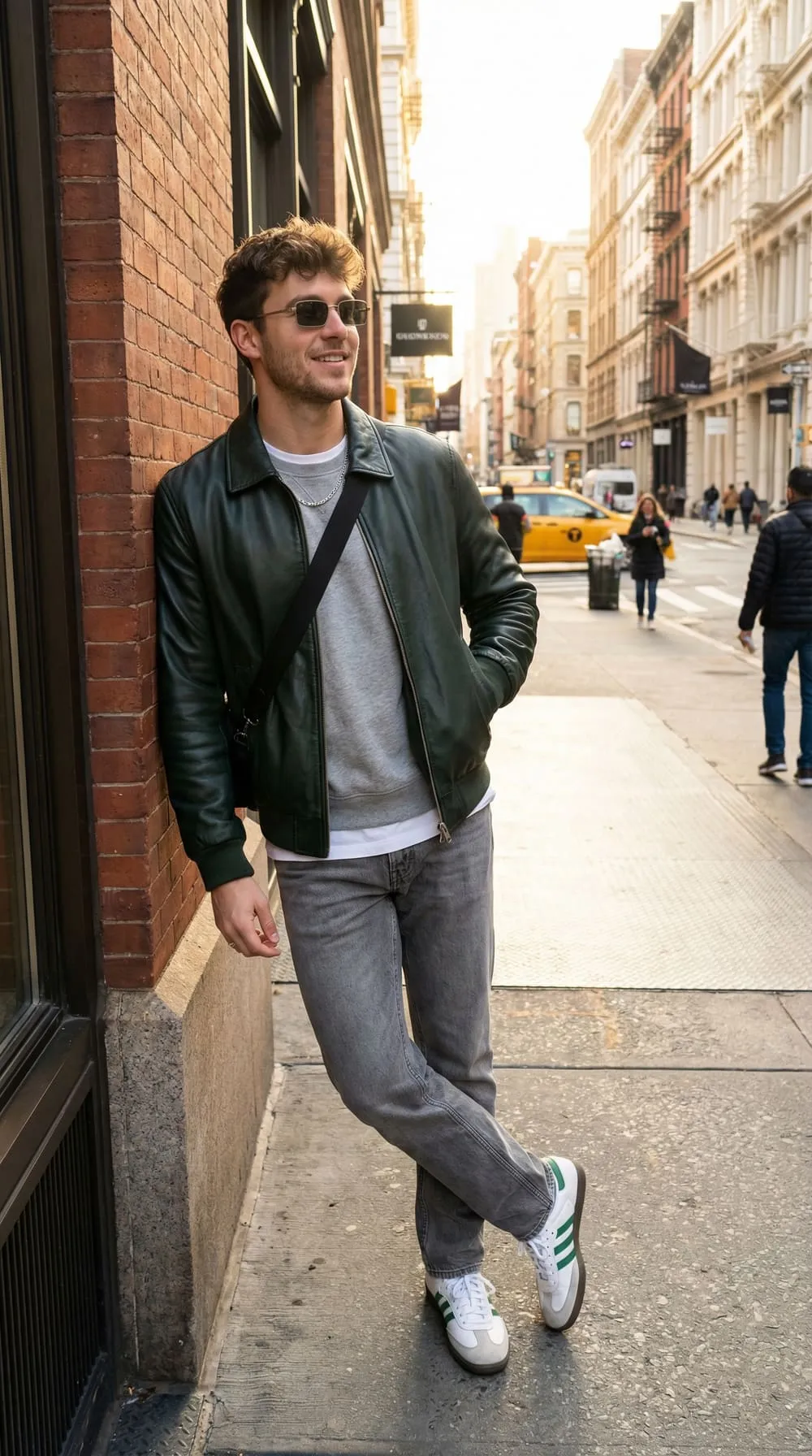
| 2 | Full-body shot | Prove you are not hiding your build; show fit and proportions | Standing in a park or street in well-fitted jeans and a jacket |
| 3 | Social proof | Show you are someone other people enjoy being around | Candid laughing with friends at a rooftop or BBQ (you clearly the focus) |
| 4 | Activity / hobby | Give a conversation hook and show a life in motion | Hiking with a view behind you, cooking, playing guitar, on a bike |
| 5 | Dressed-up shot | Show you clean up well and can dress for an occasion | A wedding, a nice dinner, a blazer that actually fits |
| 6 | Personality / warmth | Add charm and humanize you | With a dog, mid-laugh, doing something a little playful |
A few notes that matter. The lead photo carries the entire profile; if it is weak, the rest never gets seen. The full-body shot is not optional. Profiles without one get noticeably fewer matches because women assume you are concealing your body, and that assumption is worse than almost any real body. The activity and dressed-up slots are where most men have nothing, which is precisely where they lose to better-prepared competition.
What Actually Attracts More Matches: Expression, Posture, and Eyes
Most men optimize for the wrong signal. They aim for "attractive" when they should aim for "approachable and trustworthy," because those are the qualities a woman is scanning for in a stranger she might meet alone.
Smile, and smile for real. The brooding, jaw-clenched, looking-away photo that men think looks strong almost always reads as cold or insecure to women swiping fast. A genuine smile that reaches your eyes signals warmth, confidence, and safety in one shot. If you struggle to smile naturally on cue, get the photographer (or friend) to actually make you laugh, then catch the half-second after.
Make eye contact with the camera in at least your lead shot. Direct eye contact creates a feeling of connection through the screen. Save the looking-away, candid angles for your activity and social slots, where they read as natural rather than evasive.
Fix your posture before you fix anything else. Shoulders back and down, chest open, chin slightly forward and down to define your jaw. The single most common male photo flaw is a rounded, collapsed posture that shrinks your frame and reads as low energy. Standing tall with relaxed, open body language does more for perceived attractiveness than any filter.
Angles do real work. Shoot from slightly above eye level for headshots to define the jaw and avoid an up-the-nose look. For full-body, have the camera at chest height and stand at a slight angle rather than square-on, which is more flattering and less mugshot. None of this is deception; it is the same reason you stand up straight when you walk into a room.
Grooming, Outfits, and Fit: The Details Women Notice First
Women notice grooming and clothing almost instantly, because both are read as proxies for self-respect and whether you would be a low-maintenance partner. You do not need money here. You need intention.
Grooming
Get a fresh haircut a few days before any shoot, never the same day, so it settles. Define your beard with clean edges or go cleanly shaven; the deal-breaker is the patchy, unkempt in-between. Trim and clean your nails, because close-up and hand-in-frame shots expose them. Manage your eyebrows just enough that they are not competing for attention. The goal is "took twenty minutes to look after himself," not "spent an hour in front of a mirror."
Outfits and fit
Fit beats brand every single time. A nine-dollar t-shirt that actually fits your shoulders and tapers at the waist looks better than an expensive shirt that hangs like a tent. Three things to get right: shoulder seams should sit at the edge of your shoulder, sleeves should end around mid-bicep, and the hem should fall around your hip, not your thigh.
Build outfit variety across the lineup so you do not look like you own one shirt. A rough template that works for almost any man:
- Casual: dark fitted jeans, a plain crew or henley in a color that suits you, clean sneakers or boots
- Smart-casual: chinos, a button-down with sleeves rolled, or a knit over a collar
- Dressed-up: a blazer or suit that fits at the shoulders, for the "I clean up well" slot
Stick to solid colors and simple patterns; busy prints and loud logos pull attention off your face. Layers add depth and shape, which is why a jacket or overshirt almost always photographs better than a flat tee.
The Biggest Male Profile-Photo Mistakes
The pattern we see most is that men do not lose matches because of one terrible photo; they lose them through a stack of unforced errors, each one knocking a few points off. Here are the big ones, with the fix.
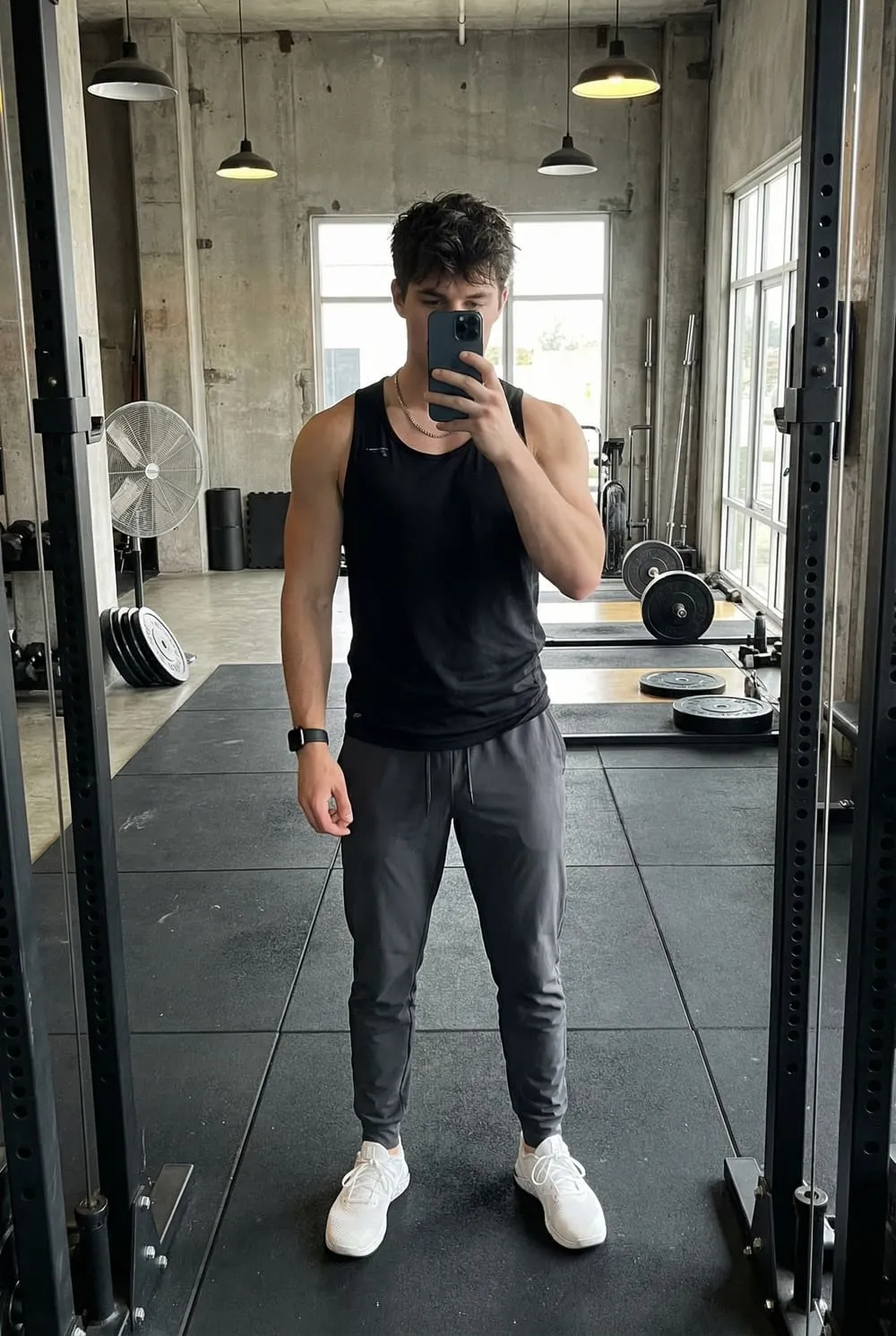
- The shirtless gym selfie. Consistently rated the number-one turn-off by women. A shirtless shot only works if it is candid and contextual, like the beach or surfing, and even then, one at most. A flexing bathroom mirror shot signals insecurity, not strength.
- Sunglasses, hats, or hidden faces in every photo. If a woman cannot clearly see your eyes and face, she swipes left, full stop. Hiding behind shades reads as either you have something to conceal or you are trying too hard to look cool. Keep at least your first two or three photos fully face-visible.
- Dead animals, guns, and trophy fish. Hunting and fishing kill shots are a hard no for a large share of women, who do not want to scroll past a carcass while looking for a partner. Even if it is a genuine hobby, the dating app is the wrong venue.
- The group-photo lead. Leading with a group shot forces a stranger to play "guess which one is him," and most will not bother. Group photos can appear later (limit one or two total) but never as your first image, and never with a friend who is more conventionally attractive than you.
- The flexing-success cliché. Sports car, wad of cash, private jet seat, expensive watch held up to the camera. This screens for the wrong matches and reads as compensating to everyone else.
- Heavy filters and obvious retouching. Surveys repeatedly show most users dislike heavy editing and distrust it. Smoothed skin, warped backgrounds, and beauty-filter eyes make you look less honest, not more handsome.
- All selfies, all the same. A profile of nothing but arm's-length selfies in the same room, same shirt, same lighting tells a woman you have no life outside your bedroom. Limit selfies to one, and make the rest photos taken by someone else.
- Low-resolution, dim, or cluttered shots. A blurry photo or a messy bedroom in the background undoes a good outfit and a good smile instantly. Clean the frame and shoot in light.
App-Specific Notes: Tinder vs. Bumble vs. Hinge
The lineup above works everywhere, but each app rewards a slightly different emphasis, and tuning your order to the platform is free upside.
Tinder is fast and visual, so the algorithm and the swiper both prize crystal-clear faces and variety. Lead with your strongest, sharpest headshot, keep the energy high, and make sure your first three photos are unmissably clear. Ambiguity dies here. Our Tinder photo generator guide for men breaks down ordering and what tends to perform on the swipe.
Bumble puts women in the driver's seat since they message first, so the photos that build approachability win: a warm, open smile and signals you are easy and safe to start a conversation with. Dressed-up shots and genuine-smile photos tend to over-perform here, and a dog will frequently out-pull a gym shot. See the Bumble photo generator walkthrough for the specifics.
Hinge is built around prompts and conversation, so story-rich, activity-based photos that hand someone an obvious thing to comment on do the heavy lifting. Candid shots tend to out-perform stiff posed ones on Hinge, and the platform's own data has pointed to black-and-white photos drawing outsized likes despite very few people using them. The Hinge photo generator guide covers how to build a prompt-friendly set.
Across all three, the same guardrail applies: most platforms ask that your photos accurately represent you, and several run photo verification to confirm at least one image is clearly the unaltered, real you.
How AI Dating Photos Help Men Who Don't Have Good Photos
Here is the gap AI actually fills. The advice above assumes you have a willing photographer, a free weekend, three outfit changes, and a few decent locations. Most men have none of that. They have a phone, a couple of mediocre selfies, and a job that eats their weekends. That is the real reason their profiles look thin, and it is exactly the problem AI dating photos for men were built to solve.
A good AI photo generator works from your own selfies and renders you in the settings, outfits, and lighting you would never get around to shooting yourself: the clean outdoor headshot, the full-body shot in a fitted jacket, the smart-casual café look, the dressed-up blazer. It is the difference between knowing you should have a six-photo lineup and actually having one by tonight, without the $300-to-$800 photographer bill or the two-week wait.
The catch, and it is the whole game, is keeping the output recognizably you. We've found the tools that work feed off your real face and preserve your jawline, beard, eye color, hairline, and skin, so the result looks like you on a good day, not a generic stranger. That is the standard TryOnWise is built around: realistic photos generated from your own selfie. Feed it your clearest, most recent shots, lean toward natural over flawless, and treat the output as a way to fill the slots you are missing, not to invent a new person.
Keeping It Authentic: The Line You Should Not Cross
There is a bright line between enhancing and inventing, and your entire dating life downstream of the swipe depends on staying on the right side of it.
Enhancing is showing the real you under better conditions: good light instead of harsh overhead glare, a clean background instead of a messy room, a flattering angle, an outfit that fits. Your face, body, and age all stay yours. This is the digital equivalent of dressing well and standing where the light is good. Nobody feels tricked, and your date recognizes you the instant you walk in.
Inventing is changing the facts: slimming your face, erasing a decade, reshaping your body, manufacturing a lifestyle you do not live. This is where AI stops being grooming and becomes a setup for failure. A higher match count is worthless if every match feels misled across the coffee table, and that mismatch poisons a first date in the first thirty seconds. The simple test: if she would feel deceived seeing you in person, you have crossed the line.
Practical rules to stay honest and effective: cap AI images at two or three, fill the rest with genuine recent photos, keep at least one clearly unedited shot prominent, and choose natural over poreless every time. "Too perfect" is exactly the look people have learned to distrust, and an all-AI profile reads as suspiciously uniform in its lighting and skin. For a deeper, men-specific breakdown of building the set, see our guide to dating photos for men. Restraint here is not just the ethical move; it is the one that actually gets you a good second date.
Frequently Asked Questions
Do AI dating photos actually work for men?
Often, yes, and the effect is largest for the men who need it most. If your current profile is bathroom selfies and cropped group shots, replacing them with clear, well-lit, varied photos is a dramatic upgrade and tends to lift match rates noticeably. If you already have a few sharp recent photos, the gain is smaller. The catch is that more matches only help if the photos still look like you, so the person you meet matches the profile.
How many photos should a man have on his dating profile?
Six to eight is the sweet spot. Fewer than six reads as low effort or like you are hiding something; more than eight reads as overthinking it. The key is not quantity but variety: a clear headshot, a full-body shot, a social photo, an activity, a dressed-up look, and one warm or playful image. That spread answers the questions every woman is silently asking about your face, your build, and your life.
What is the best lead photo for a man?
A clear, well-lit headshot taken outdoors in soft daylight, head and shoulders, with a genuine smile and direct eye contact. No sunglasses, no hat covering your face, no group, no ambiguity. The lead photo carries the entire profile, because if it does not earn the swipe, nothing else you uploaded ever gets seen. Sharp and approachable beats moody and mysterious almost every time.
Are AI dating photos allowed on Tinder, Bumble, and Hinge?
Generally yes, as long as they accurately represent you. None of the major apps ban AI outright, but all of them ban misrepresentation, and several ask for at least one photo that is clearly the unaltered, real you. Bumble runs the most aggressive detection against deceptive and heavily altered images. A natural, recognizable AI photo sits inside the rules; an altered jawline, age, or body does not and risks being flagged.
Is using AI dating photos basically catfishing?
Only if you invent rather than enhance. Showing the real you in better light, framing, and a fitted outfit is no more catfishing than wearing your best clothes to a date. Slimming your face, erasing years, or reshaping your body is misrepresentation. The blunt test: if your match would feel deceived the moment they meet you in person, you have crossed the line into catfishing. Stay recognizable and you are fine.
What is the number-one photo mistake men make?
Two compete for the title. The shirtless gym mirror selfie is consistently rated a top turn-off and reads as insecure rather than strong. The other is hiding your face behind sunglasses, hats, or group shots in every photo, which makes women swipe left because they cannot see what you actually look like. Both fixes are free: show your face clearly and keep shirtless shots out (or candid and contextual at most).
Do I really need a full-body photo?
Yes. Profiles without a full-body shot get noticeably fewer matches because women assume you are concealing your build, and that assumption is usually worse than the reality. One clear standing photo in well-fitted clothes, shot at a slight angle from chest height, builds trust before a single message is sent. You do not need to be lean; you need to look honest and put-together.
Should I use a filter or smooth my skin in dating photos?
No. Surveys repeatedly show most users dislike heavy retouching and trust filtered photos less, not more. Smoothed skin, warped backgrounds, and beauty-filter eyes read as dishonest and trip the "what is he hiding" instinct. Aim for clean, sharp, natural images with real skin texture. Good lighting and a fitted outfit do far more for how you look than any filter, and they survive the in-person meeting.
The Bottom Line
AI dating photos for men are not a cheat code, and they are not a gimmick. They are a way to finally have the lineup the advice has always told you to build: a clear headshot, an honest full-body shot, an activity, a dressed-up look, and a couple of warm, real moments, in good light, with a real smile and open posture. In our experience, the men who win on dating apps are rarely the best-looking. They are the ones who show up clear, varied, well-groomed, and recognizable while everyone around them posts blurry mirror selfies.
Use the lineup. Fix the posture and the smile first. Cut the shirtless flex, the sunglasses, the dead fish, and the group-photo lead. Tune the order to the app. And if you are missing the shots, use AI to fill the gaps honestly, capping it at two or three images that still look unmistakably like you. Do that, and your photos will finally work as hard as the rest of you already does.