Intro
Two years ago you could spot a generated image in a second. Seven fingers, melted glasses, a background that dissolved into abstract shapes. That era is over. The current generation of image models produces photographs that survive a casual look, a zoom, and often a careful one.
So the honest answer to how to tell if a photo is AI generated has changed. It's no longer a list of visual glitches. It's a layered process: look for the tells that still survive, check the provenance that increasingly travels with images, verify the context around the photo, and know when the correct answer is "I can't tell from the image alone."
This guide covers each layer, explains why AI detectors are less useful than they sound, and gives you a practical workflow for the situations where it actually matters: dating profiles, marketplace listings, news images, and anything asking you for money or trust.
Why this got hard
Three things changed at once.
Model quality crossed a threshold. Hands, teeth, and eyes, the classic failure points, are now handled well by the leading models most of the time. Skin texture, depth of field, and lighting consistency have all improved to the point where they're no longer reliable tells.
Generated images get post-processed. Someone who wants to deceive you doesn't post raw model output. They crop it, compress it, add grain, run it through a phone filter, and screenshot it. Every one of those steps destroys the subtle statistical fingerprints that detection tools look for.
Editing and generation blurred together. A real photo with an AI-extended background, an AI-replaced sky, or an AI-removed object is partly synthetic. "Is this AI" is often not a yes or no question, which is exactly why binary detectors struggle.
The practical consequence: treat image inspection as one input among several, not as a verdict.
The visual tells that still work
These are ordered roughly by how reliable they remain. None is conclusive on its own.
Text and typography. Still the single best tell. Signage, book spines, logos, license plates, brand names on clothing, and writing on packaging frequently come out as convincing-looking gibberish or letters that almost form words. Zoom into any text in the image.
Repeating patterns in crowds and backgrounds. Look at people in the background of a busy scene. Faces that repeat, bodies merging, identical clothing on multiple figures, and railings or tiles that lose their rhythm are common. Generators handle the subject well and get lazy at the edges.
Asymmetry that should be symmetry. Earrings that don't match, glasses arms at different angles or thicknesses, buttons on the wrong side, collars with different shapes on each side, and shoelaces that don't correspond. Paired objects are a persistent weakness.
Physics of reflections and shadows. Check whether a mirror or window reflection matches the scene, whether shadows fall consistently from one light source, and whether the person casts a shadow at all. Reflections in eyes and glasses are especially telling.
Where things connect. Hair meeting a shoulder, a strap crossing a body, a watch meeting a wrist, fingers meeting a cup handle. Junctions between objects are where models still fudge.
Jewelry, chains, and fine hardware. Chains that fuse or change thickness, zipper teeth that dissolve, and buckles that don't connect to anything.
Skin and texture uniformity. Skin that is smooth in a way that's uniform across the whole face, including areas that would normally show more texture. Also watch for pores that look identical across regions.
Too-perfect composition and lighting. Not a defect, but a signal. Flawless studio lighting on a supposedly casual snapshot, or a background bokeh that's suspiciously even, is worth a second look.
Teeth and ears. Improved but still imperfect. Ear structure in particular is complex and often subtly wrong.
Here's how much weight each tell still carries:
| Tell | Still reliable? | Where to look |
|---|---|---|
| Text and typography | Strong | Signage, logos, book spines, packaging, plates |
| Background crowds and patterns | Strong | Faces and figures behind the subject, tiles, railings |
| Asymmetric paired objects | Moderate | Earrings, glasses arms, buttons, collars, laces |
| Reflections and shadows | Moderate | Mirrors, windows, eyes, direction of light |
| Object junctions | Moderate | Hair on shoulders, straps, watches, fingers on handles |
| Fine hardware | Moderate | Chains, zippers, buckles, clasps |
| Hands and fingers | Weak now | Count and joint structure, overlapping fingers |
| Skin texture | Weak now | Uniform smoothness across the whole face |
| Teeth and ears | Weak now | Tooth separation, ear folds and cartilage |
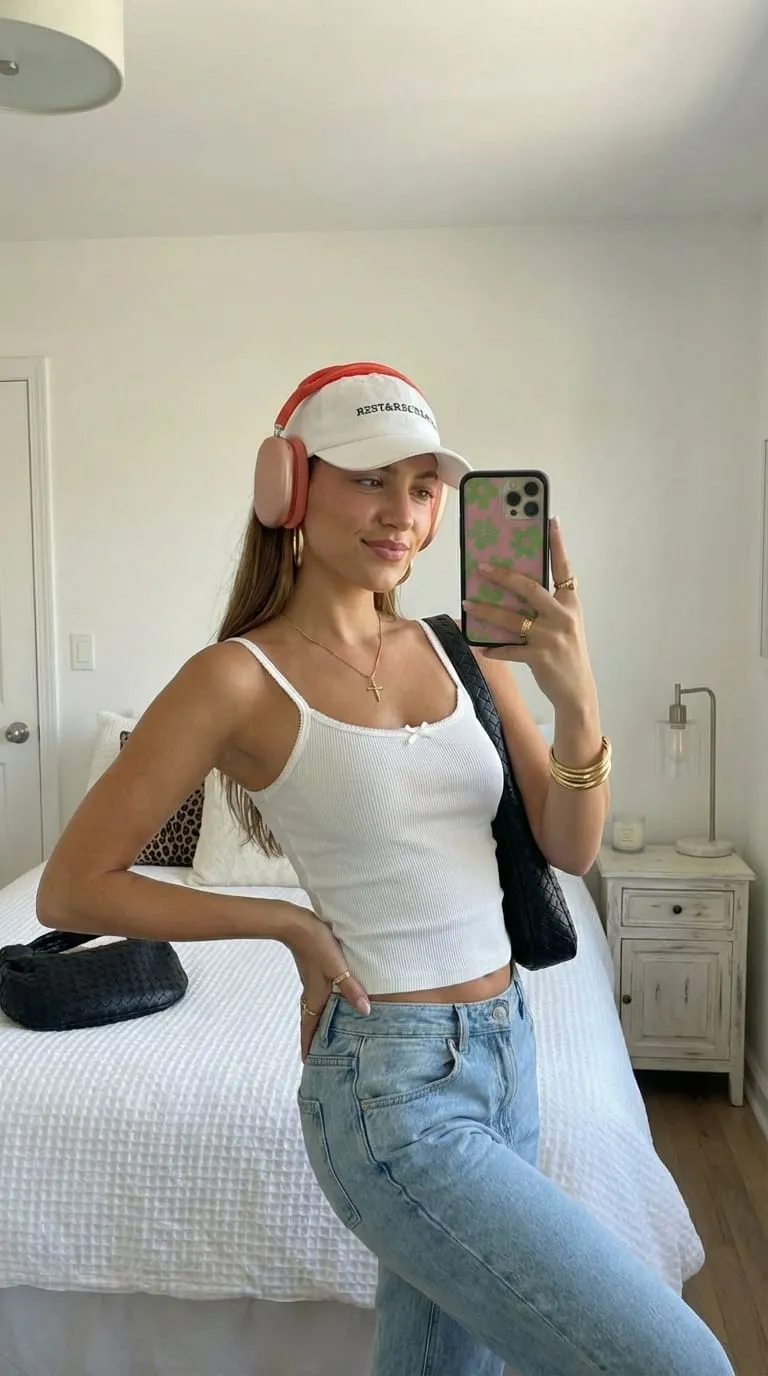
Generated images look like this now. The visual tells listed above are increasingly the exception rather than the rule, which is why provenance and context checks matter more.
Why AI detectors are less useful than they sound
Upload an image to a detector and you get a confident percentage. Treat it with real skepticism.
They're trained on specific generators. A detector trained on last year's models performs much worse on this year's, and worse still on models it never saw.
Compression destroys the signal. Screenshots, social platform re-encoding, and messaging app compression strip the subtle artifacts detectors rely on. The image you're checking has usually been through several of these.
False positives hit real photos. Heavily edited real photographs, phone computational photography, and photos processed with beauty modes all get flagged regularly. A false accusation is a real harm, not a rounding error.
Nobody publishes on your image. Reported accuracy comes from benchmark sets, not from the one image you care about.
Use detectors as a weak signal alongside other evidence. A high confidence score is a reason to look harder, never a conclusion by itself.
Provenance: the layer that actually scales
This is where the field is heading, and it's more reliable than pixel inspection.
Content Credentials and C2PA. The C2PA standard attaches cryptographically signed provenance data to an image: what created it, what edits were applied, and when. Cameras, editing software, and generation tools are progressively adopting it, and the consumer-facing side is branded as Content Credentials. When present, this is far stronger evidence than any visual guess. When absent, it proves nothing, since metadata is easily stripped.
Invisible watermarking. Google's SynthID embeds an imperceptible watermark into generated images that survives many common modifications, with detection tooling to match. Other labs have comparable systems. Coverage is partial and limited to participating generators, but it's growing.
Google's "About this image". Google Search includes an About this image panel showing when an image was first indexed, where else it has appeared, and how other sites describe it. For a photo that's circulating, this is frequently the fastest way to establish that it isn't what someone claims.
Check the file's metadata. EXIF data can show camera model, lens, and capture settings. Its presence is mildly reassuring; its absence proves nothing, because social platforms strip EXIF as a matter of routine.
Context checks, which usually settle it
In most real situations, the image itself isn't the evidence that matters.
Reverse image search. Run the photo through Google Images, TinEye, or Bing Visual Search. If the same face appears on twelve profiles with different names, you're done. This single step resolves more cases than every visual tell combined.
Look for the boring companions. Real people have unglamorous photos: bad lighting, half-closed eyes, an awkward crop, a photo from four years ago with a different haircut. A profile where every image is beautifully lit and perfectly composed is worth questioning, even if no single image is detectably fake.
Check consistency across images. Does the same mole, scar, tattoo, or piercing appear in every photo? Generated sets frequently drift on small permanent features. Look at the same detail in three images.
Check the account, not just the photo. Creation date, posting history, follower patterns, and whether anything ties to a real-world footprint. A three-week-old account with immaculate photos is the pattern.
Ask for something unrepeatable. In a live conversation, ask for a video call or a photo doing something specific and mundane, like holding up three fingers next to their ear. This is still the most decisive test available to a normal person.
When it matters most
Dating profiles. Use the platform's verification badge as your first filter, since verified profiles have matched a live video selfie against their photos. Reverse image search anything that feels off. Push for a video call before meeting. If someone consistently avoids live video while escalating emotionally, that pattern is documented extensively in the FTC's guidance on romance scams, and it matters far more than pixel forensics.
Marketplace listings. Product photos that are too clean, with no wear, no background, and no scale reference, deserve a request for a specific extra photo: the item next to today's newspaper, or a particular angle. Sellers with real items provide it easily.
News and breaking events. Check whether established outlets are carrying the same image. During fast-moving events, generated images circulate quickly and get corrected slowly. "About this image" and reverse search are the fastest checks.
Job applicants and business contacts. Reverse image search plus a video call. Stock and generated headshots on professional profiles are common enough to be worth thirty seconds of checking.
Not all AI photos are deceptive
Worth stating clearly, because the framing of this topic often collapses into "AI photo equals fake."
A generated image is a tool, and the question that matters is whether it misrepresents something. A person who uses an AI photo generator to produce a clean headshot from their own selfies, keeping their face and build accurate, has misrepresented nothing. Neither has a small brand rendering its actual product on a model. The problem is not synthesis. It's a photo claiming to be something it isn't: a person who doesn't exist, a product that doesn't look like that, or an event that didn't happen.
The practical line is honesty about identity and attributes. We wrote about where that line sits for dating photos specifically in do AI dating photos work, and about the tradeoffs versus real photography in AI photos vs hiring a photographer. If you're generating your own images, the same standard applies: enhance, don't fabricate. That's the principle behind the examples in our gallery and the photo generator itself.
Frequently Asked Questions
What are the most reliable signs a photo is AI generated?
Text is still the strongest visual tell: signage, logos, and writing frequently come out as near-gibberish. After that, look at repeating faces and patterns in backgrounds, asymmetry in paired objects like earrings and glasses arms, reflections and shadows that don't match the scene, and the junctions where objects meet, such as hair against a shoulder. None of these is conclusive alone, so treat them as reasons to look further.
Do AI image detectors actually work?
Only partially, and less well than their confidence scores suggest. They're trained on particular generators and degrade sharply on newer ones. Compression from screenshots and social platforms destroys the artifacts they rely on, and heavily edited real photos regularly trigger false positives. Use a detector as a weak signal that justifies more investigation, never as a verdict on its own.
Can you tell if a dating profile photo is AI generated?
Sometimes from the image, more often from context. Start with the platform's verification badge, which confirms photos match a live video selfie. Then reverse image search the photos, check whether permanent features like moles and tattoos stay consistent across images, and look for the absence of ordinary imperfect photos. The decisive test is still a live video call.
What are Content Credentials and how do I check them?
Content Credentials are cryptographically signed provenance data attached to an image under the C2PA standard, recording what created it and what edits were applied. Supporting apps and websites display them as an indicator you can click for details, and verification tools exist for checking files directly. Their presence is strong evidence; their absence proves nothing, since metadata is routinely stripped by platforms.
Does EXIF data prove a photo is real?
No. EXIF can show camera model, lens, and capture settings, which is mildly reassuring when present and consistent. But EXIF is trivially editable, and virtually every social platform strips it on upload, so most legitimate images you encounter have none. Absent EXIF is normal, not suspicious, and present EXIF is not proof.
How do I check where a photo came from?
Run a reverse image search on Google Images, TinEye, or Bing Visual Search to find other places it has appeared. In Google Search results, the "About this image" panel shows when an image was first indexed and how other sites have used it. Between them, these two checks resolve most cases faster and more definitively than examining the pixels.
Is it wrong to use AI-generated photos of yourself?
Not inherently. The question is whether the image misrepresents you. Using a generator to produce a clean headshot or fill a gap in a photo set, from your own real photos, with your face and build unchanged, misrepresents nothing. Altering your appearance so that someone meeting you would be surprised is the line. Most platforms frame their rules the same way, prohibiting misleading images rather than synthetic ones.
Conclusion
How to tell if a photo is AI generated is no longer a matter of counting fingers. Work in layers instead. Scan for the tells that still survive, especially text, background repetition, asymmetric paired objects, and impossible reflections. Check for provenance through Content Credentials, watermarking, and "About this image." Then do the context work: reverse image search, cross-image consistency, account history, and a live video call when the stakes justify one.
And accept the limit honestly. For a well-made, post-processed image with no provenance data, you often cannot tell from the picture alone, and confidently claiming otherwise causes its own harm. The reliable path runs through verification and context, not forensics. As provenance standards spread, that path only gets easier.