Intro
If you sell clothing online, on-model imagery is not optional. Shoppers won't buy a garment they can only see flat on a white background, and every conversion study points the same way: the more clearly a customer can picture the item on a body, the more likely they are to order and the less likely they are to send it back.
The problem is that on-model imagery has always been the most expensive, slowest, least flexible part of a product launch. A photoshoot is a logistics project. Samples have to exist, arrive, and fit. A model has to be booked. A studio has to be free. Post-production takes a week. Then a colorway changes and half of it needs redoing.
Virtual try-on and AI on-model generation changed the economics of that, but not evenly, and not for everything. This is an honest comparison of virtual try-on vs photoshoot for brands: what each actually produces, where the money goes, where each one wins, what the disclosure rules require, and the hybrid workflow most teams end up with.
Note that this covers commercial product imagery. If you're weighing AI photos for your own personal profile or portfolio, our comparison of AI photo generators vs traditional photography is the relevant one.
What each one actually produces
They are not substitutes for one another, which is the first thing to be clear about.
A photoshoot produces original imagery with full rights, real fabric behavior, and brand-directed art direction. A stylist decides how the sleeve is pushed up. A photographer decides how light falls across a fabric's weave. The result carries intent, and that intent is a large part of what people mean by brand.
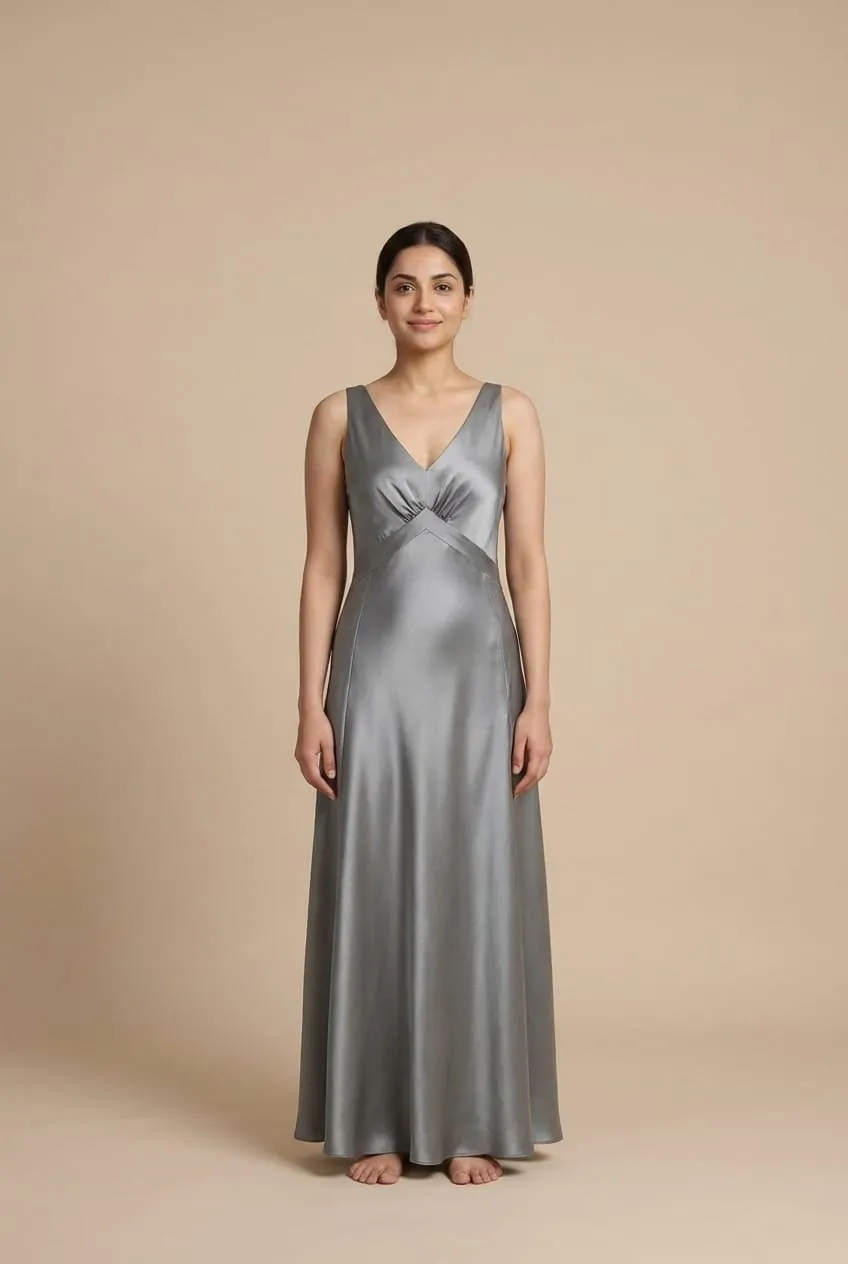
Virtual try-on and AI on-model generation produce catalog imagery at volume. They take an existing garment image and render it convincingly on a body, or many bodies, in many settings. What they buy you is coverage and speed, not art direction.
Put crudely: a photoshoot creates a look. AI generation replicates a look across a catalog.
Where the money and time actually go
Cost comparisons in this space are usually nonsense, because a "photoshoot" ranges from a friend with a camera to a full production. Rather than invent numbers, here's the line-item structure. Fill in your own market's rates and the comparison becomes real.
| Line item | Traditional photoshoot | AI on-model generation |
|---|---|---|
| Physical samples | Required, must exist and fit the model | Required only as a product image, often the flat or a single shot |
| Model | Booked per day or per hour, plus usage rights | Not booked; body types selected or generated |
| Photographer and assistant | Day rate | None |
| Studio, lighting, equipment | Day or half-day rental | None |
| Styling and hair/makeup | Per day, plus kit | None |
| Post-production and retouching | Per image, usually the largest hidden cost | Included in generation, plus review time |
| Turnaround | Typically weeks from booking to delivered assets | Minutes to hours per image |
| Reshoots for variants | Full or partial repeat of the above | Regenerate |
| Usage rights and renewals | Negotiated, time-limited, renewable at cost | Governed by the tool's licence terms |
Two observations that matter more than any headline figure.
Retouching is where photoshoot budgets quietly go. Teams budget the shoot day and underestimate the per-image post-production, which scales linearly with SKU count.
Model usage rights expire. Imagery you paid for may need re-licensing to keep running, and that renewal often arrives long after the campaign that justified it. This is one of the least visible ongoing costs in fashion e-commerce and one of the strongest arguments for AI coverage on long-tail SKUs.
Where photoshoots still win
Anyone telling you AI has made photography obsolete is selling something. Several jobs still clearly belong to a camera.
Hero and campaign imagery. The images that define a season, run on your homepage, and appear in paid media. These carry brand meaning and deserve a director's intent.
Fabric truth on hard materials. Sequins, high-sheen satin, sheer layers, complex knits, and anything with unusual light behavior. Generation handles these worst, and they're exactly the fabrics where customers most need accuracy.
Motion and video. Movement is the strongest signal of how a garment actually behaves, and it remains firmly in the camera's territory.
Anything with a claim attached. If the image supports a specific factual claim about the product, shoot it. This is a legal exposure question, not an aesthetic one.
Brand differentiation. If your visual identity is a competitive asset, generating it from the same models as everyone else erodes the thing you were paying for.
Where virtual try-on wins
The wins cluster around volume, variation, and speed.
Long-tail SKU coverage. The 200 items that will never justify their own shoot day but still need on-model imagery. This is the strongest case by a wide margin.
Colorway and variant coverage. One shot, many colors, without a repeat shoot. Variants are where photoshoot budgets break.
Body and size diversity. Showing a garment on a range of body types has been prohibitively expensive with traditional shoots, so most brands show one. Generation makes range affordable, and range is precisely what reduces fit-related returns.
Pre-production and merchandising decisions. Seeing a design on a body before samples exist changes what gets ordered. Several teams we've spoken to use it here first, before it ever touches the storefront.
Testing and iteration. Trying five background treatments or three styling directions costs almost nothing, which makes A/B testing product imagery practical for the first time.
Shopper-facing try-on. Letting customers see items on themselves is a different application again, and the one most directly tied to conversion and returns. We covered the mechanics in boosting e-commerce conversions with virtual try-on, and the AI model photo generator page shows what catalog-grade output looks like. The use-case index maps which garment categories are covered.
The hybrid workflow most brands land on
Almost nobody who does this seriously goes all-in on either side. The pattern that keeps recurring:
Shoot the hero. Two to four campaign looks per season, fully produced, with real art direction. These carry the brand.
Shoot one reference per fabric family. A representative piece in each difficult material, photographed properly, so you have ground truth for how that fabric behaves and looks.
Generate the catalog. Long-tail SKUs, colorways, and size and body variants, produced from flats or a single reference shot.
Review everything before it ships. Generated imagery needs a human quality gate, and the checklist below is the minimum.
Offer shopper try-on at the product page. Different job again, aimed at conversion rather than catalog coverage.
This splits spend along the line where each method is strongest, and it survives a season change without a full reshoot.
Disclosure, accuracy, and the rules
This part is not optional, and it's where the most avoidable damage happens.
The image must not misrepresent the product. This is the core principle behind advertising law in most markets. If a generated image shows a fabric with a sheen it doesn't have, a fit it doesn't deliver, or a color that doesn't match, that's a misleading representation regardless of how it was produced. The FTC's advertising guidance is the plainest statement of the principle for US sellers.
Transparency obligations for synthetic content are tightening. The EU AI Act introduces transparency requirements for AI-generated and manipulated content, with obligations phasing in over time. If you sell into the EU, treat labelling of synthetic imagery as a near-term requirement rather than a nice-to-have.
Body representation deserves care. Generating a diverse range of bodies is genuinely useful when it helps customers judge fit. It becomes a problem when it implies representation your brand doesn't actually practice, or when generated bodies are used in place of paying real models for campaign work.
Keep a provenance record. Note which images are generated, from what source, and when. Content provenance standards such as C2PA are being adopted across the imaging industry, and having the record already will be much easier than reconstructing it later.
A quality gate for generated product imagery
Before any generated image goes live, check:
- Color accuracy against the physical sample, under neutral light. This is the most common and most costly failure.
- Silhouette and drape match how the garment actually hangs. Compare to a reference shot.
- Details survive: buttons, hardware, seam lines, pockets, and stitching. Fine detail is where generation still slips.
- Print and logo scale and alignment are correct. Text on garments remains the hardest case.
- Proportions are plausible on the body shown, without impossible anatomy.
- Consistency across the set, so the product grid doesn't look like it came from six different brands.
- Labelling and metadata applied per your disclosure policy.
A useful rule of thumb: if a returning customer could tell the image was wrong once the parcel arrived, the image failed, no matter how good it looks on screen.
Frequently Asked Questions
Is virtual try-on cheaper than a photoshoot?
For catalog and variant imagery, substantially, because it removes model, studio, crew, styling, and per-image retouching costs, and regenerating a variant costs almost nothing. For a small number of hero images, the gap narrows and the photoshoot often remains worth it. The honest comparison is per-SKU across a full season rather than per-image, since variants and reshoots are where photoshoot budgets actually break.
Can AI product images replace a photoshoot entirely?
Not for everything. Hero and campaign imagery, difficult fabrics like sequins and sheers, motion and video, and any image supporting a specific product claim still belong to a camera. What AI replaces well is the long tail: the hundreds of SKUs and colorways that need on-model imagery but will never justify their own shoot day. Most brands run both.
Do I need to disclose that product images are AI-generated?
Increasingly, yes. The EU AI Act introduces transparency requirements for AI-generated and manipulated content, and advertising law everywhere already prohibits misleading representation regardless of how an image was made. The safe policy is to label generated imagery, keep a provenance record of what was generated and from what source, and never let a generated image imply a fit, color, or fabric behavior the product doesn't have.
Does virtual try-on reduce returns?
It helps with the share of returns driven by "it didn't look how I expected," which sits alongside sizing as a leading cause in fashion. Showing a garment on a range of body types, and letting shoppers see it on themselves, addresses the appearance mismatch directly. It does not fix sizing, so pairing it with accurate garment measurements and a good size guide produces the larger reduction.
What do I need to generate on-model images?
At minimum, a clean product image: a flat lay or a single well-lit shot on a plain background. Higher resolution input produces noticeably better output, particularly for prints and hardware. For color-critical items, a physical sample photographed under neutral light gives you a reference to check generated color against, which is the check most worth building into the process.
Which garments are hardest to generate well?
Sequins, high-sheen satin, sheer and layered fabrics, complex knits, and anything with fine text or intricate logos. These are also the items where customers most need visual accuracy, so they're the natural candidates for real photography. Simple solids, cottons, denim, and knitwear in plain colors generate reliably and make up the bulk of most catalogs.
How do I keep generated images consistent with my brand?
Fix your variables. Use the same lighting treatment, background, framing, and body selection across the catalog, and shoot one real reference per fabric family to calibrate against. Inconsistency, not individual image quality, is what makes a generated product grid look off. A human review pass against a written checklist catches drift before it reaches the storefront.
Conclusion
Virtual try-on vs photoshoot is not a question with one answer, because the two methods are good at different things. A photoshoot buys intent, fabric truth, and brand differentiation. AI on-model generation buys coverage, variants, body diversity, and speed at a per-image cost that makes the long tail viable for the first time.
The workflow that holds up is the split one: shoot your heroes and one reference per difficult fabric, generate the catalog and its variants, gate everything through a real quality check, label what's synthetic, and offer shopper-facing try-on at the product page where it does the most for conversion. Spend the photography budget where a camera is genuinely irreplaceable, and stop spending it on the two hundredth colorway.