Intro
Every guide to dating photos tells you to smile, use good light, and include a full-body shot. Almost none of them tell you what to actually put on, which is strange, because clothing is the thing you have the most control over and the thing that changes a photo most reliably. Lighting you can't always choose. Your face is your face. But what to wear in dating photos is entirely a decision, and most people make it by grabbing whatever was clean.
Clothes do three jobs in a profile photo: they set the color palette around your face, they communicate effort, and they establish a silhouette. Get those right across six photos and an average camera roll starts looking like it was planned.
This guide covers colors that photograph well against your skin, fits that read as intentional, patterns that break on camera, an outfit plan for each photo slot, and how to test any of it before you shoot.
The three jobs your clothes are doing
Framing your face. Your collar and shoulders occupy the space directly around your face in every head-and-shoulders shot. The color there reflects onto your skin and either warms it or drains it. This is why the same person looks healthy in one shirt and tired in another.
Signalling effort. Not expense. Effort. A well-fitted plain shirt reads as more considered than an expensive but shapeless one. People read "this person can put themselves together" long before they read a brand.
Creating a silhouette. In full-body shots, your outfit is your outline. Structured pieces create a defined shape. Oversized layers create a rectangle. Neither is wrong, but only one of them is a choice you made on purpose.
Colors that work near your face
Start here, because it's the highest-impact decision and the least intuitive.
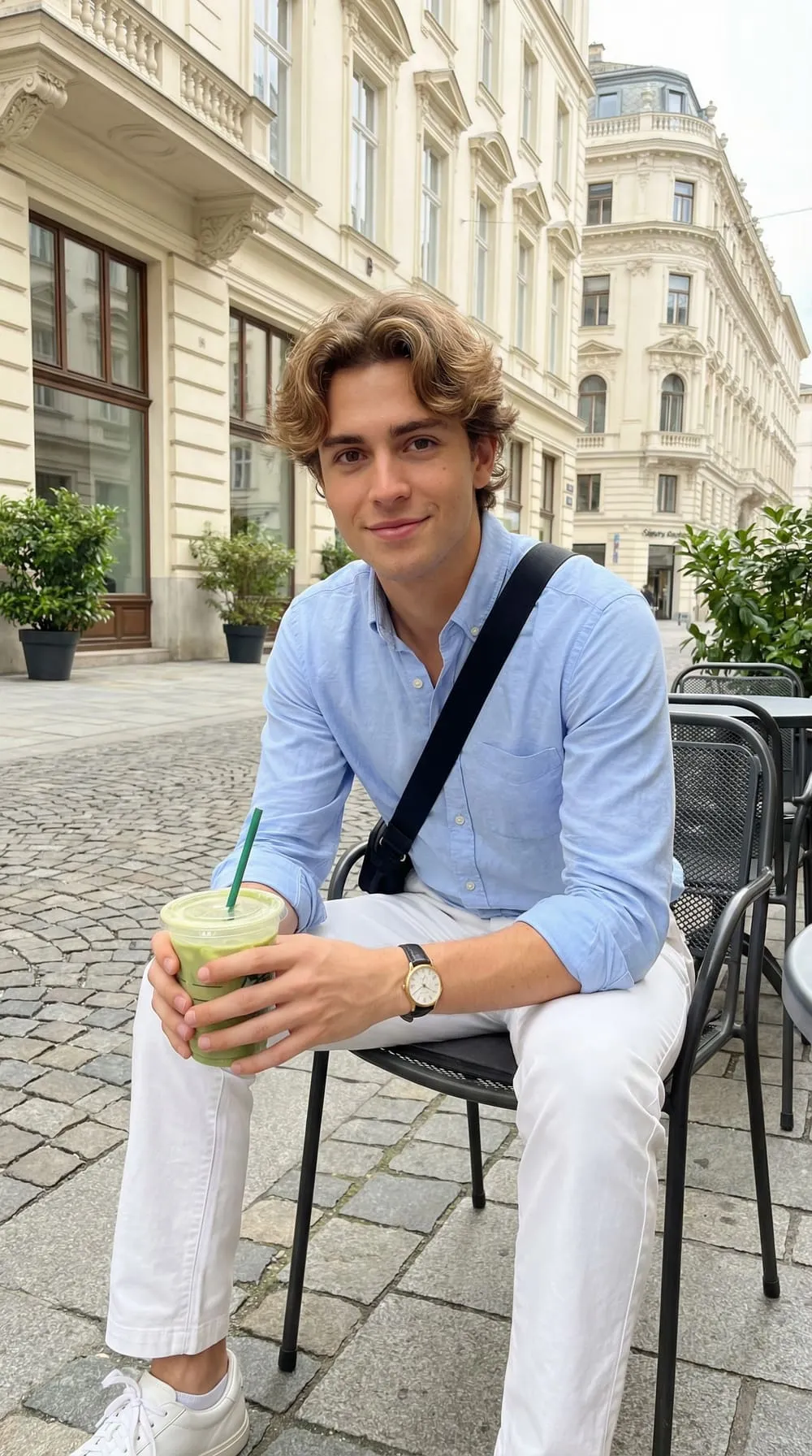
Solid, saturated mid-tones photograph best. Deep green, navy, burgundy, rust, teal, and mid-blue are reliable across a wide range of skin tones. They hold color under most lighting, contrast with typical backgrounds, and don't compete with your face.
Pure white and pure black are harder than they look. White blows out in bright light and picks up color casts indoors. Black loses all detail in low light and turns your torso into a shape with no texture. Both work in controlled light and cause problems everywhere else. If you love black, choose charcoal or a black with visible texture like a rib knit.
Match the undertone, not the season. Warmer skin undertones generally sit well with olive, camel, rust, cream, and warm reds. Cooler undertones tend to sit well with navy, emerald, true blue, plum, and cool grey. The quick test: hold two shirts under a window, one warm and one cool, and see which one makes your skin look brighter rather than yellow or ashen. This is more reliable than any online quiz.
Avoid colors that match your skin exactly. A beige shirt against pale skin, or a deep brown against deep skin, can merge and flatten the photo. Contrast is what separates you from the background and gives the image depth.
Watch the background clash. A green shirt in a park makes you disappear. A blue shirt against a blue wall does the same. One quick glance at where you're shooting saves the whole set.
Fit beats everything else
If you take one thing from this guide: fit does more for a photo than price, brand, or trend.
Shoulder seams should sit on your shoulder. Not down your arm. This one line determines whether a shirt or jacket looks tailored or borrowed, and cameras exaggerate it.
Sleeves should end at the wrist bone. Longer reads as sloppy. Shorter reads as outgrown.
Waist definition matters in full-body shots. Something that indicates where your waist is, whether that's a fitted cut, a belt, or a tucked hem, prevents the rectangle effect. This applies regardless of body type or gender.
Hems should hit intentionally. A t-shirt that ends mid-hip reads clean. One that ends mid-thigh reads like sleepwear. For dresses and skirts, the hem's position relative to the narrowest part of your calf changes the whole line of the photo.
Oversized only works when something else is fitted. An oversized jacket with slim trousers is a silhouette. Oversized everything is a bag.
Our guide to the art of fit goes deeper on proportions and silhouettes if you want the underlying principles.
Patterns and textures: what breaks on camera
Some fabrics that look great in person fall apart in a photo.
Fine stripes, small checks, and tight herringbone can produce moiré, the shimmering interference pattern that appears when a repeating pattern conflicts with a camera sensor's pixel grid. It looks like a digital error, and phone cameras are not immune. If a pattern's repeat is smaller than about a centimeter, be cautious.
Big logos date a photo instantly. They also become the subject of the image. A profile photo should be about you.
Loud all-over prints compete with your face. One patterned piece per outfit is plenty, and it works best below the neckline rather than framing it.
Texture is the safe way to add interest. Ribbed knits, corduroy, linen, cable knits, and denim all photograph with depth without introducing a competing pattern. If you find plain colors boring, reach for texture rather than print. Our fabric guide covers how different materials behave and photograph.
Shiny synthetics catch flash badly. High-sheen polyester and satin can produce hot spots under direct light. Matte finishes are more forgiving in the uncontrolled lighting most dating photos are shot in.
An outfit plan for six photos
The point of planning is variety. Six photos in the same grey hoodie is a wasted set even if every individual shot is good. Here's a workable structure.
| Slot | Photo type | Outfit approach | Why |
|---|---|---|---|
| 1 | Face shot | Solid mid-tone top with a defined collar or neckline | Frames the face, gives the eye a clean line |
| 2 | Full body | Fitted top, structured bottom, visible waist | Shows silhouette honestly |
| 3 | Activity | Whatever you genuinely wear for it | Credibility beats styling here |
| 4 | Social | Slightly dressed up, evening or daytime social | Shows how you present around others |
| 5 | Style shot | Your best-fitting outfit, one notch above everyday | Demonstrates range and effort |
| 6 | Candid | Relaxed and comfortable | Contrast to slot 5, reads as real |
Two rules on top of the table. No repeat outfits across the six, because repetition signals a single day of shooting. And at least one visibly dressed-up look and one visibly casual look, so the set covers the range of contexts someone might actually meet you in.
If you want gender-specific shot lists to pair with this, the men's and women's dating photo guides break down what tends to land for each, and our deeper walkthrough of AI dating photos for men covers how to build the set when your camera roll can't.
What not to wear
The recurring mistakes, in rough order of how much damage they do.
- Sunglasses in your lead photo. Not clothing exactly, but the most costly accessory decision on any dating app.
- Anything you've outgrown. Straining buttons and pulling seams photograph badly and read as not caring.
- Gym clothes outside a gym context. Fine in an activity shot. Odd as your main look.
- All black in dim light. Your torso becomes a silhouette with no detail.
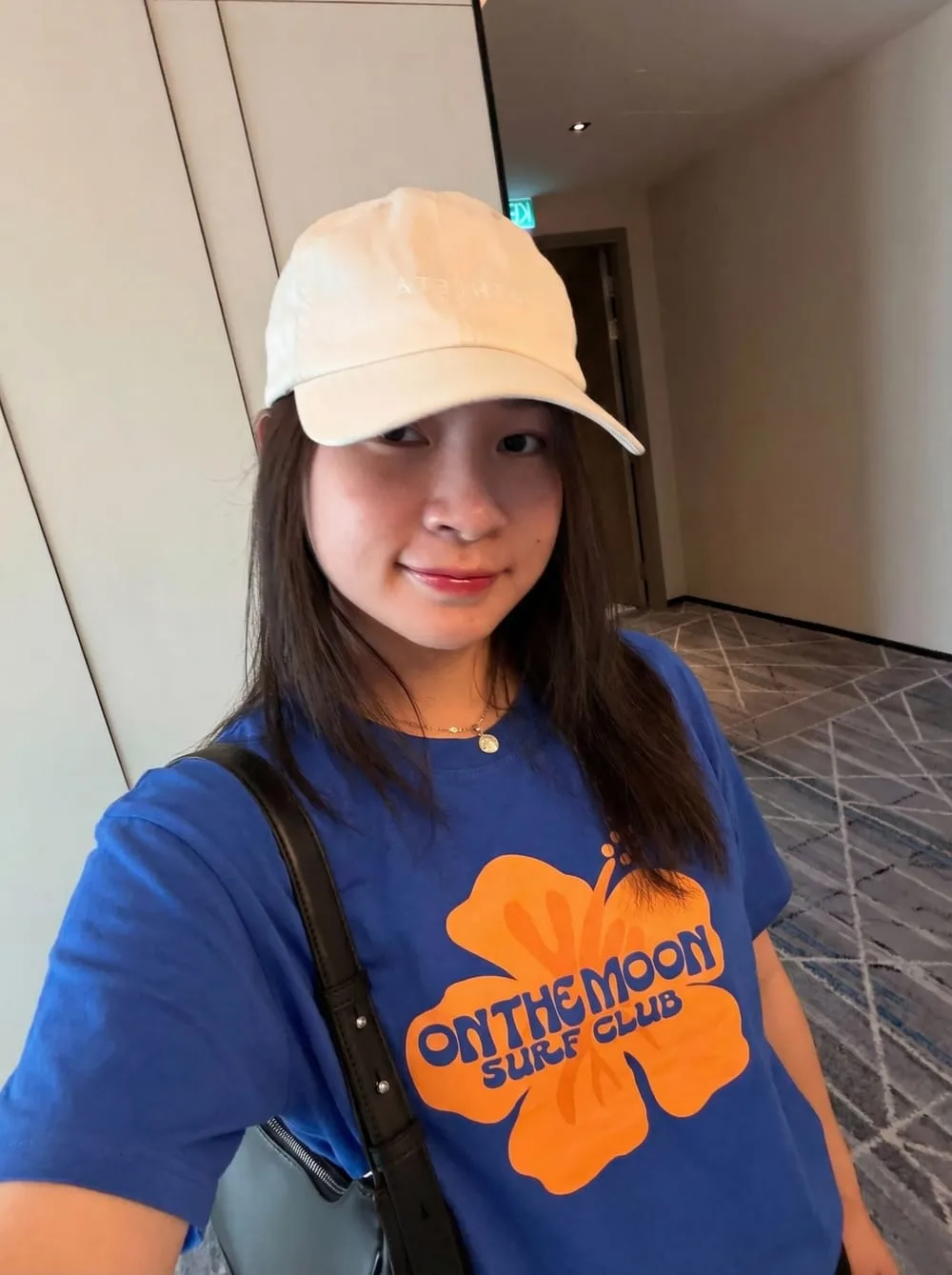
- Novelty tees and slogan shirts. They make a joke on your behalf before you've said anything.
- Head-to-toe brand-new outfits. They photograph stiff. Wear something once before you shoot in it.
- Swimwear photographed indoors. Beyond looking odd, it breaches the photo rules on several apps, including Bumble's guidelines, which permit swimwear at the beach but not in a bathroom.
- Costumes and heavy makeup in your lead. Save them for a later slot where the context is obvious.
Test the outfit before you shoot it
The genuinely annoying part of planning a shoot is that you don't know how an outfit photographs until you've already shot it. Two ways to shorten that loop.
Take a phone test shot in the actual light. Stand where you plan to shoot, in the outfit, and take one frame. You'll immediately see whether the color works against the background and whether the fit reads the way you think it does. Thirty seconds, and it catches most problems.
Preview outfits virtually. Photo-based try-on lets you see a garment rendered onto your own full-body photo before you buy it or dig it out of the back of the wardrobe. It's useful here for exactly the questions this guide raises: whether a color suits your skin tone on camera, whether a cut creates the silhouette you want, and whether two options are meaningfully different. You can test looks on the try-on generator, or browse how different formal, casual, and streetwear pieces render.
We've found this is where people discover that the outfit they were sure about is the flatter of the two options. Comparing side by side is much more reliable than imagining.
Frequently Asked Questions
What colors are best for dating photos?
Solid mid-tone colors like navy, deep green, burgundy, rust, and teal photograph reliably across most skin tones. They hold color under varied lighting and contrast with common backgrounds. Pure white and pure black are harder, since white blows out in bright light and black loses detail in dim light. Match your skin's undertone rather than following seasonal trends, and avoid colors that match your background.
Should you dress up or dress casually for dating photos?
Both, across the set. One clearly dressed-up look shows effort and range, and one relaxed casual look shows how you actually are day to day. A profile that's entirely formal reads as stiff or work-focused; one that's entirely casual reads as low effort. The full-body and style slots are where dressing up pays, and the activity and candid slots are where casual is more credible.
What should you not wear in dating photos?
Sunglasses in your lead photo, anything you've outgrown, novelty slogan tees, large logos, all-black outfits in dim light, and swimwear photographed indoors. Fine stripes and tight checks can also create shimmering moiré patterns on camera. Avoid head-to-toe brand-new outfits too, since unworn clothes photograph stiff. When in doubt, choose a well-fitted solid in a mid-tone color.
Does fit matter more than the clothes themselves?
Yes, consistently. A plain shirt that fits at the shoulder and ends at the wrist reads as more considered than an expensive piece that hangs badly. Cameras exaggerate poor fit, particularly at the shoulder seam and hem. If you're choosing between spending on a new piece or having an existing one altered, alteration almost always produces the better photo.
Should I wear the same outfit in all my dating photos?
No. Repeating an outfit signals that every photo came from one session and reduces the perceived variety of your life. Aim for a different outfit in each of the main slots, spanning at least one dressed-up look, one everyday look, and whatever you genuinely wear for your activity photo. Variety in clothing does as much work as variety in setting.
What patterns photograph badly?
Fine stripes, small checks, and tight herringbone can create moiré, a shimmering interference effect caused by the pattern conflicting with the camera sensor. Large all-over prints compete with your face for attention. Big logos date the photo and become its subject. Texture is the safer way to add visual interest, since ribbed knits, corduroy, linen, and denim add depth without introducing a competing pattern.
How can I tell if an outfit will photograph well before the shoot?
Take one test frame in the exact spot and light you plan to use. Most problems, including color clashing with the background and unflattering fit, are obvious immediately. For clothes you don't own yet, photo-based virtual try-on lets you render a garment onto a full-body photo of yourself and compare options side by side, which answers the color and silhouette questions before you spend anything.
Conclusion
What to wear in dating photos comes down to three decisions repeated across six shots: a color that brightens your skin rather than draining it, a fit that sits at the shoulder and defines your waist, and enough variety that no two photos read as the same day.
Solid mid-tones near the face. Texture instead of loud print. One dressed-up look, one genuinely casual one, and nothing you've outgrown. Test the outfit in the actual light before you commit, whether that's a single phone frame or a virtual render, and you'll skip the version of this where you shoot forty photos and like none of them.